Carpinus caroliniana
American Hornbeam, Ironwood
Betulaceae

Habitat
- native to Canada down through Texas across to Florida
- hardy to zone 3
Habit and Form
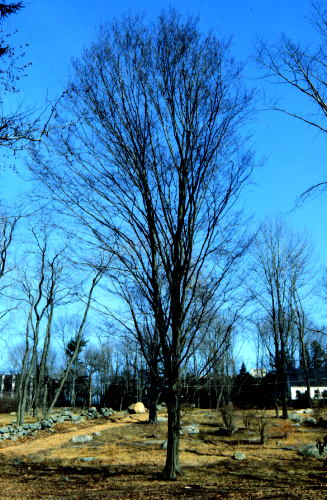
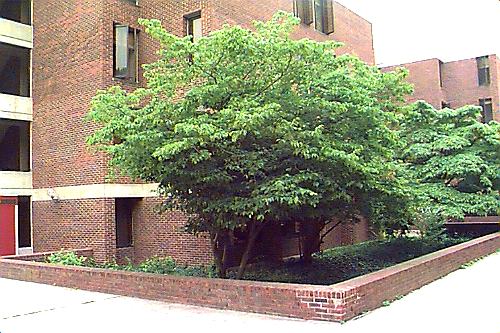
- a deciduous large shrub or small tree
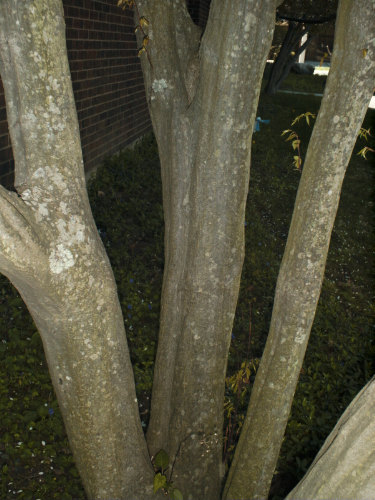
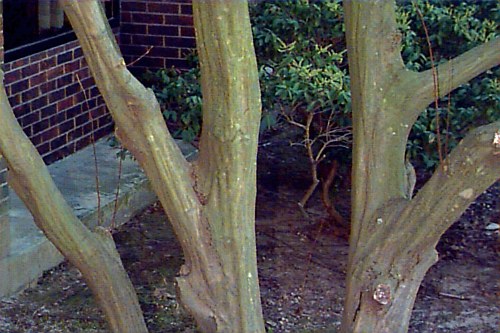
- multistemmed
- wide spreading, flat-topped crown
- 20' to 30' tall and as wide or wider
- slow growth rate
- medium texture
Summer Foliage
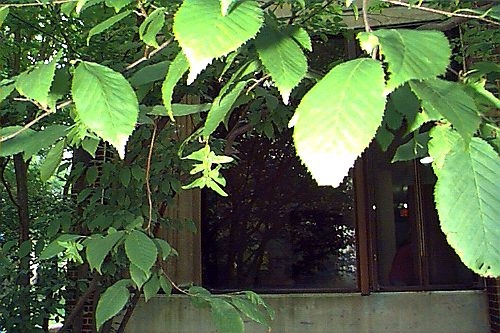
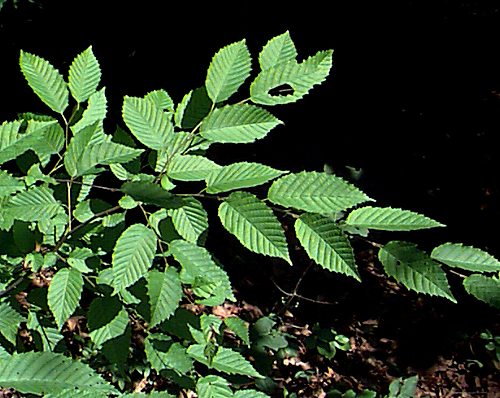
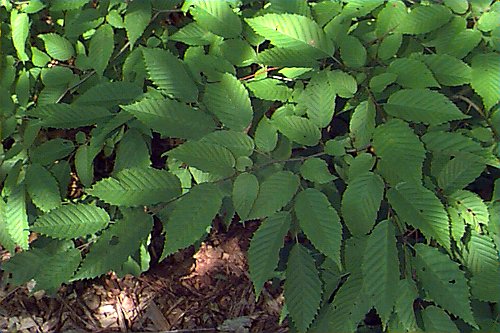
- alternate leaf arrangement
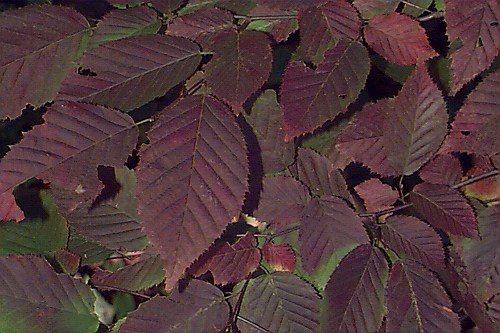
- simple, deciduous leaves
- 2.5" long and 5" wide
- oblong leaf shape
- doubly-serrated leaf margin
- dark green leaf color, glabrous
Autumn Foliage
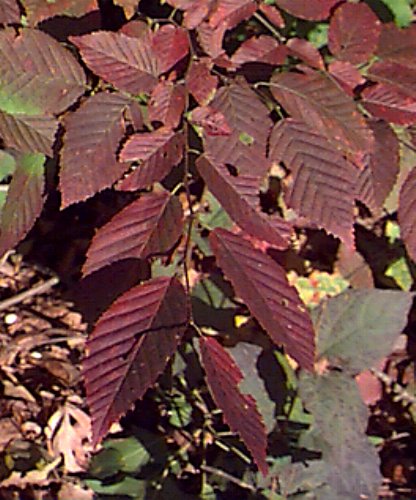
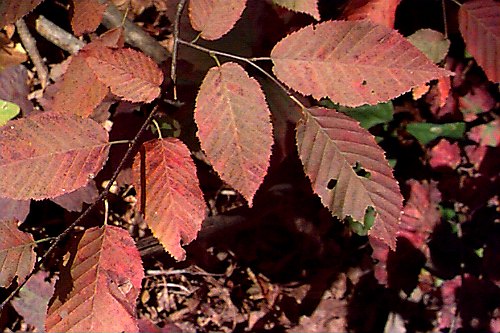
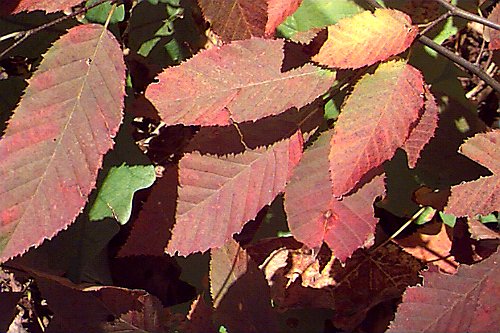
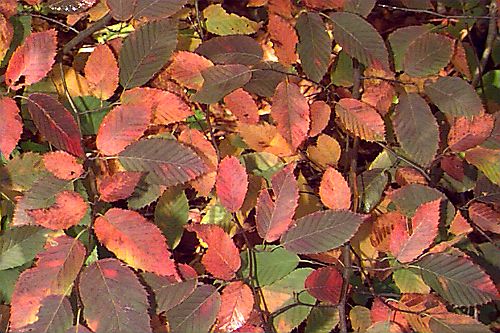
- yellow, orange, and red fall color
- variable
Flowers
- monoecious with male and female flowers on the same plant
- female flowers are 4" long and are attached to a 3-winged bract
- male flowers are not ornamentally important
- blooms in April
Fruit
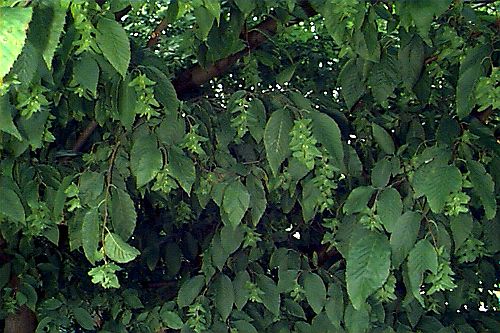
- a nutlet subtended by a 3-winged, leaf-like bract
- 1" long
- numerous nutlets are held together in pendulous chain-like clusters
- color changes from green to brown in September thru October
Bark
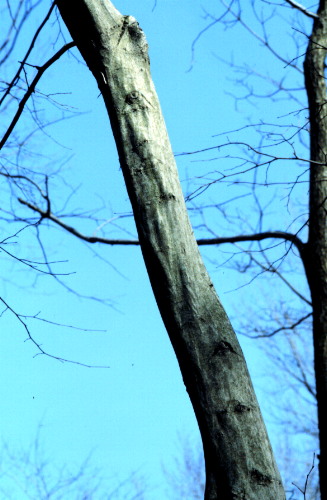
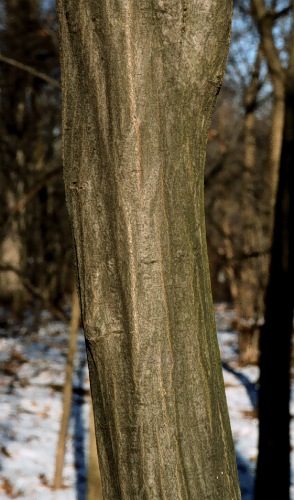
- smooth, gray bark
- fluted base
- vertical ridges
- slender, dark brown, hairy stems
Culture
- transplants from containers
- prefers, deep fertile, moist, acidic soil
- full sun to shade
- prune tolerant
Landscape Use
- shade tree
- lawn tree
- park tree
- naturalized area
- hedge
- screen
Liabilities
- leaf diseases
- cankers
- doesn't transplant well
ID Features
- small, imbricate buds, 0.25" long
- buds are pointed and hairy
- alternate leaf arrangement
- clusters of nutlets with 3-winged bracts
- fluted, muscle-like bark
- dense, clean summer foliage
Propagation
- by seed, but requires stratification
- cuttings can be rooted, but they are difficult
Cultivars/Varieties
- few and hard to find