Betula maximowicziana
Monarch Birch
Betulaceae
Habitat
- native to Japan
- zone 5
Habit and Form
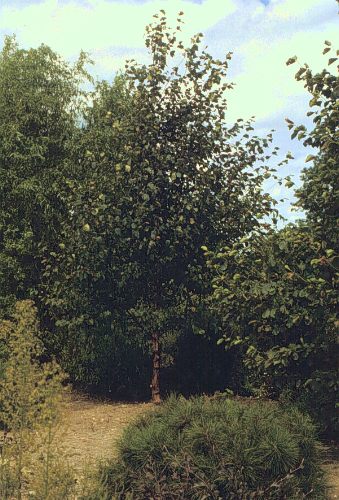
- 80' to 100' tall deciduous tree
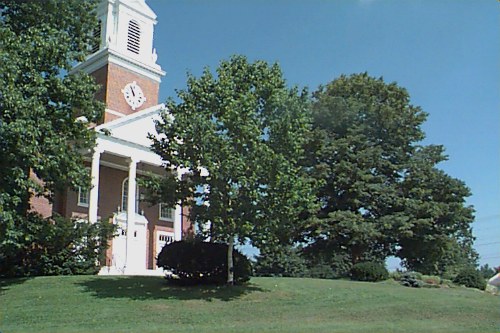
- cultivated plants typically 40' to 60'
- generally pyramidal shape when younger
- becoming rounded and more irregular with age
- coarse texture
Summer Foliage
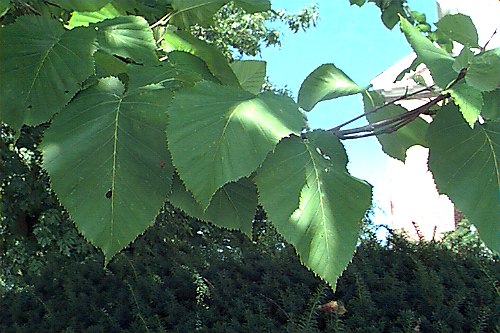
- leaves are the largest of the birches
- 3" to 6" long, up to 4" wide
- alternate, heart-shaped, doubly tooted, single arrangement leaves
- new leaves downy, maturing to glabrous dark green
- distinctly cordate leaf bases
Autumn Foliage
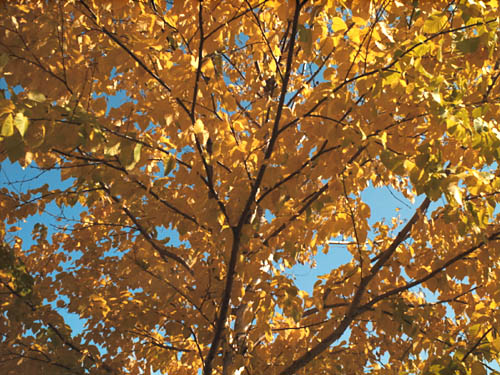
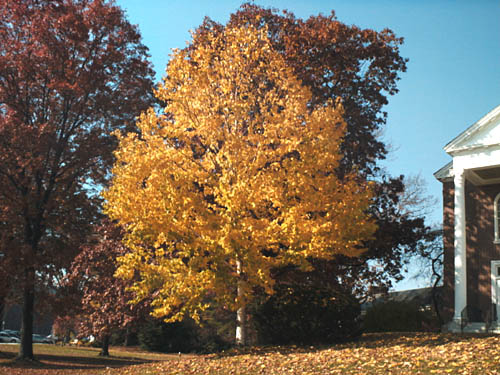
- yellow
- generally quite showy
Flowers
- blooms in April, but catkins visible before bloom
- monoecious: male catkins 4" to 5" long; female catkins up to 2.5", in racemes of two to four
Fruit
- nutlets held in cylindrical catkins
Bark
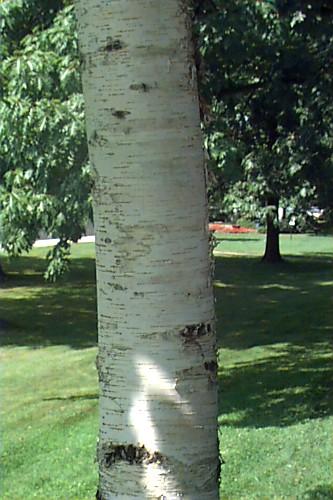
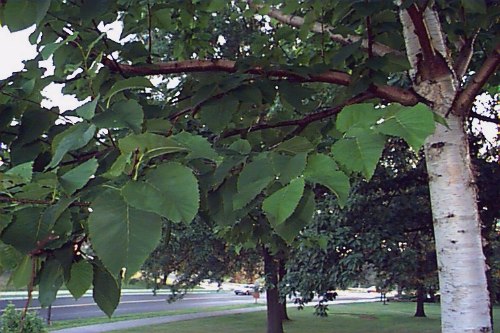
- when young it is smooth, somewhat shiny and bronze-colored
- mature bark ranges from gray to fairly good white, but the quality of white bark depends on the seed source
Culture
- a rare plant so limited cultural information has been developed
- appears to be easy to grow
- grows rapidly
- locate in full sun
Landscape Use
- a specimen tree
- lawn tree
- casts light shade
- for showy bark
- reported to be resistant to bronze birch borer which plagues other white barked birches
Liabilities
- not all plants sold in the trade are true B. maximowicziana
- good white bark color may not develop on all B. maximowicziana
- rare and difficult to locate for purchase
- probable not cold hardy at all beyond zone 5
ID Features
- very long leaves and coarse texture make it easy to distinguish from other birches
- dense pubescence on young leaves
- racemous female catkins
- distinctly cordate leaf bases
Propagation
- by seed
Cultivars/Varieties
- None