Stewartia koreana
Korean Stewartia
Theaceae
Habitat
- hardy through zone 5
- Korea an understory tree
Habit and Form
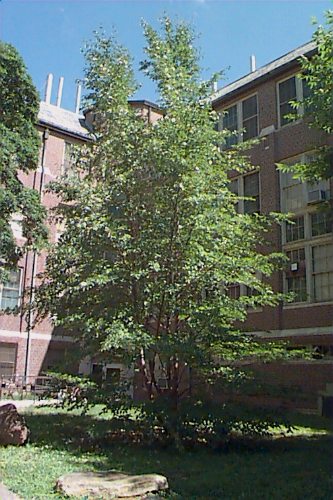
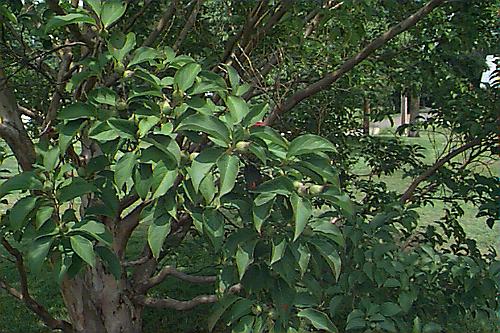
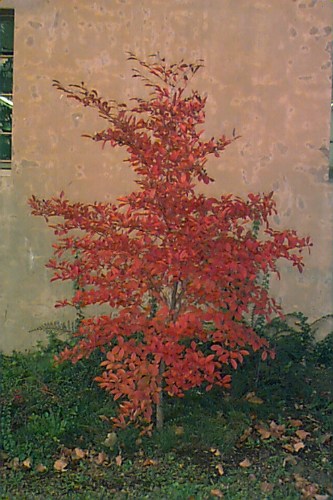
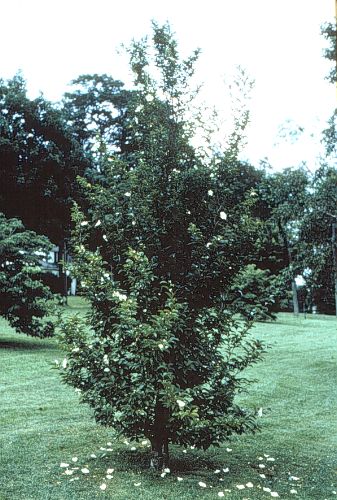
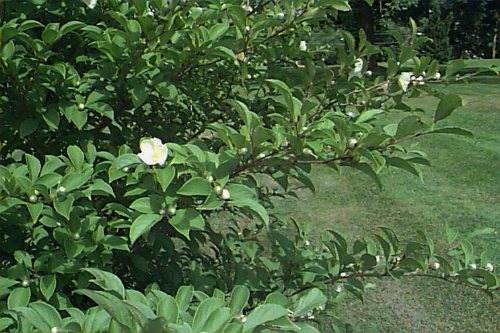
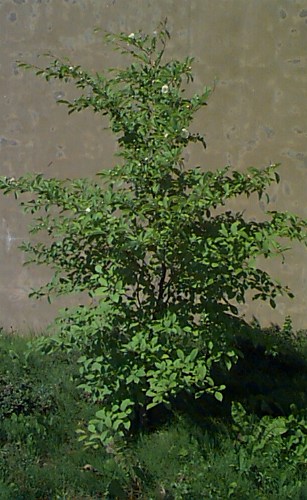
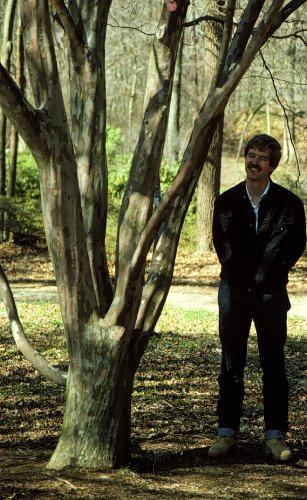
- a small, deciduous tree
- 20' to 30' tall
- relatively dense foliage
- pyramidal or oval shape
- upright and spreading branching
Summer Foliage
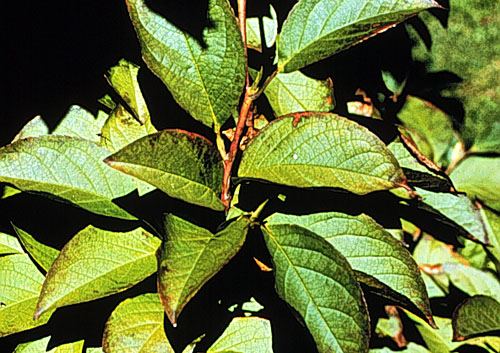
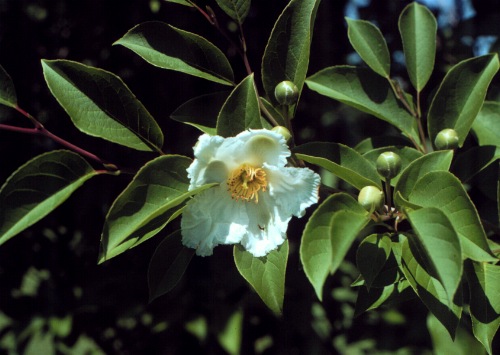
- alternate leaf arrangement
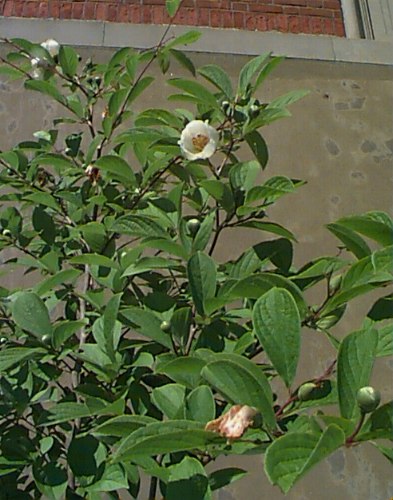
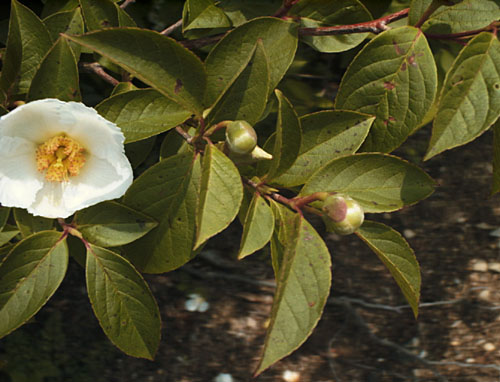
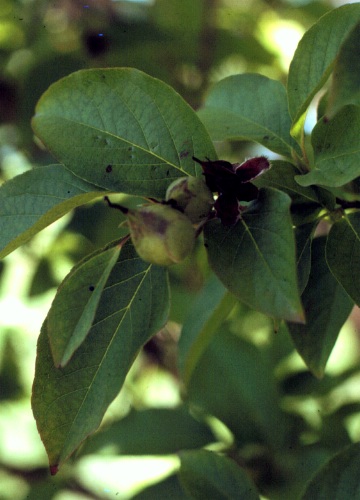
- simple, elliptic leaves
- dark green color
- very minute serrations along the margin
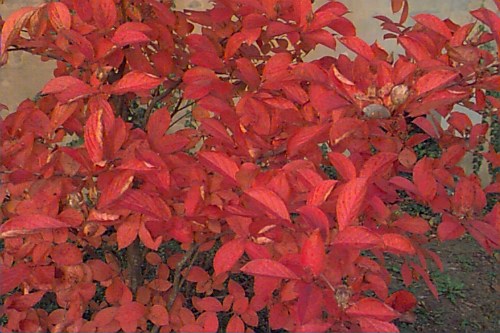
Autumn Foliage
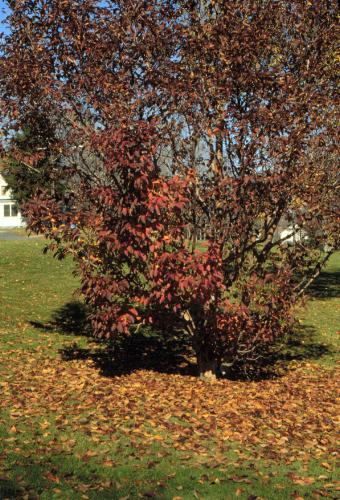
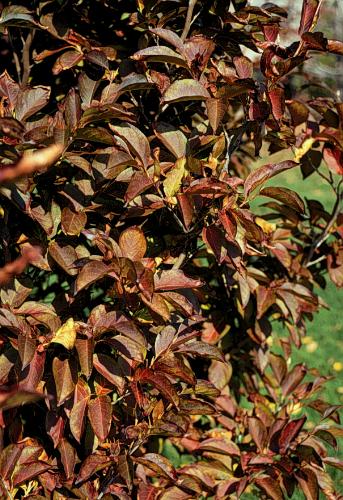
- usually quite showy, but some individual plants don't color well
- mix or orange, yellow, red and purple
Flowers
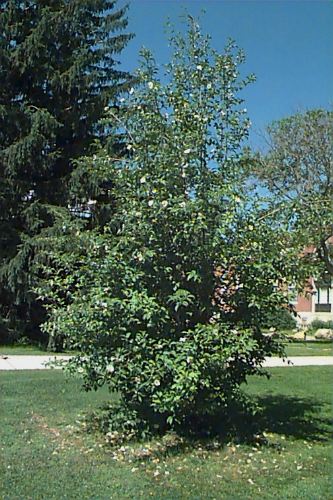
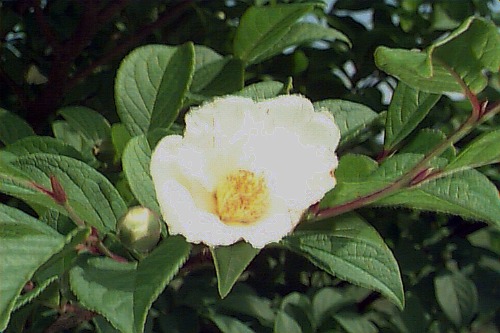
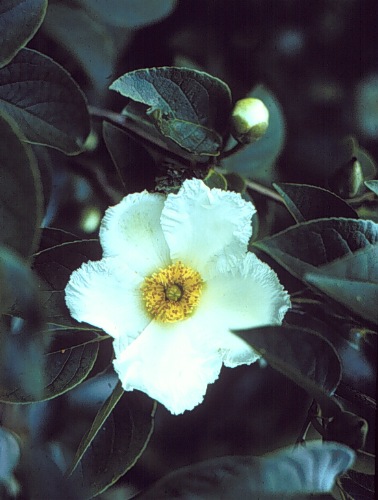
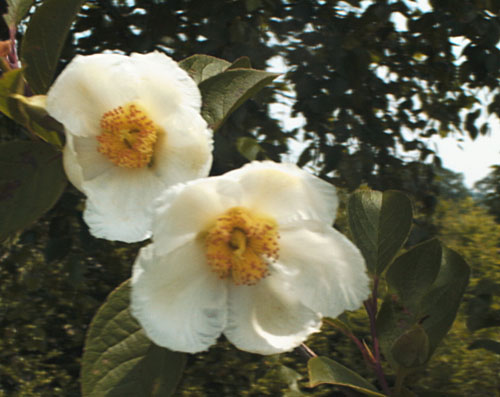
- white flowers with yellow stamens
- 3" in diameter
- 5 to 6 petals
- more open and flattened than S. pseudocamellia
- blooms in June and July
- long bloom period
Fruit
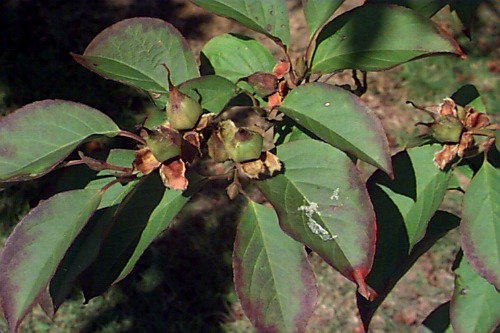
- a hard, woody, pointed capsule
- dehisces in 5 parts
- brown color when mature
- 1.5" to 2" long
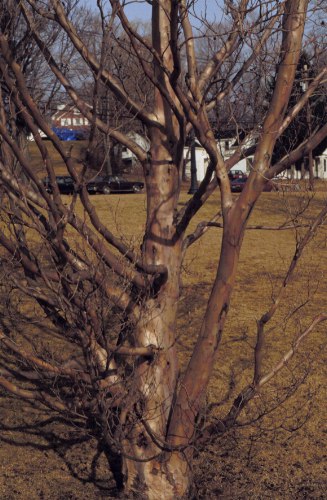
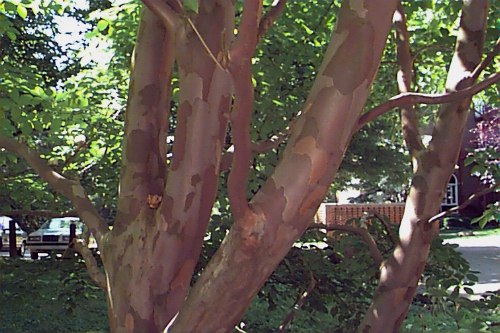
Bark
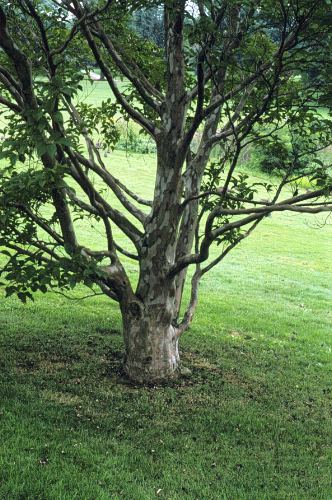
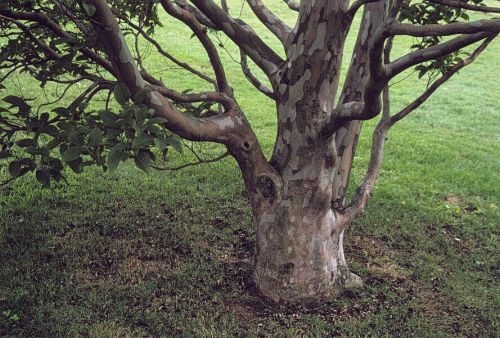
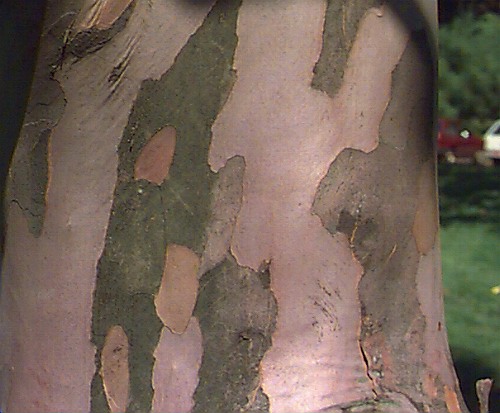
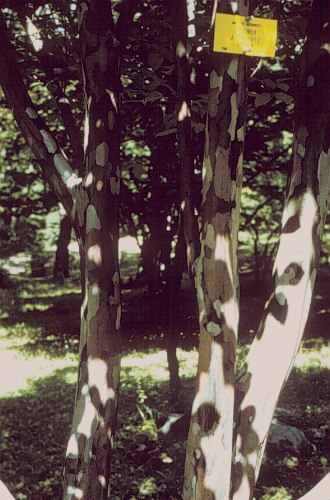
- very attractive and striking
- flakes off in irregular puzzle piece shapes
- color is a mix of steel gray, browns and orange-brown
- underlying bark is very smooth
Culture
- full sun for most of the day
- needs acidic, moist, cool, fertile soils that are well-drained and high in organic matter
- somewhat difficult to transplant
- relatively carefree once established
- trim up lower branches some to make bark more visible
Landscape Use
- specimen
- lawn tree
- for long bloom time in summer when most trees are done blooming
- for bark
- for good fall color
Liabilities
- hard to transplant
- somewhat slow growing
- relatively uncommon and expensive to purchase
- not tolerant of difficult sites
ID Features
- flaking bark
- white flowers with yellow stamens in summer
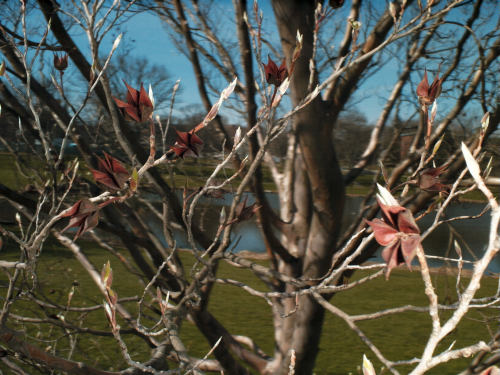
- branchlets are 2-ranked
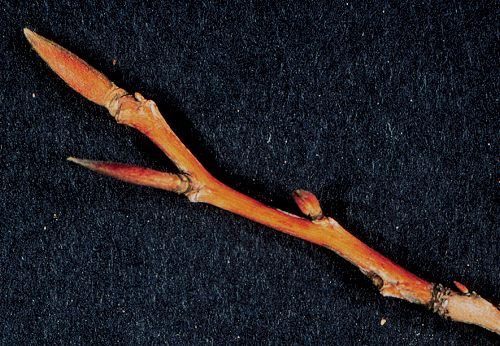
- buds are elongated with hairs at the tips
- stems with a zigzag pattern
Propagation
- by cuttings
- by seed
Cultivars/Varieties
- none