Ailanthus altissima
Tree of Heaven
Simaroubaceae



Habitat
- native to China
- widely naturalized in the eastern United States
- hardy to zone 4
- Special Note: This species has demonstrated an invasive tendency in Connecticut, meaning it may escape from cultivation and naturalize in minimally managed areas. For more information, .
Habit and Form
- medium-sized shade tree
- deciduous
- upright, spreading and open; few, coarse branches
- 40' to 60' tall and nearly as wide
- very fast growing (3' to 5' per year)
- coarse texture
Summer Foliage
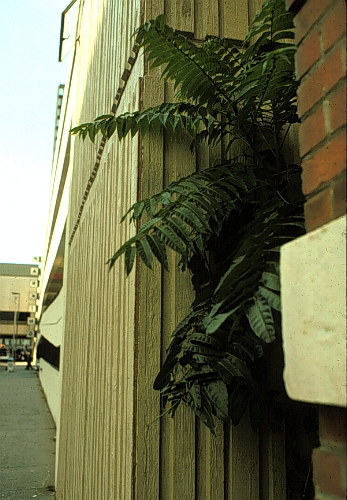
- alternate, pinnately compound, 18" to 24" long, with up to 25 leaflets
- dark green
- a tropical-looking leaf
Autumn Foliage
- none
Flowers
- blooms in early to mid-June
- 8" to 16" panicles of inconspicuous yellowish flowers
- dioecious; male flowers malodorous
Fruit
- samara, 1.5" long, on female trees
- yellowish to bright red, turning brown when ripe
- wing of fruit is twisted, enabling samara to spin rapidly when falling
- fruit clusters persist and offer interest in late summer through winter
Bark
- pale gray and smooth, with lighter, vertical streaks
Culture
- adaptable to the most disagreeable conditions (salt, pollution, poor soil, heat, drought)
Landscape Use
- useful in urban settings where trees won't normally grow
- may be useful at seaside or roadside sites, due to its salt tolerance
- old, established trees have a unique exotic appearance due to massive trunks and tropical-looking foliage
Liabilities
- prolific fruiting, ready germination, adaptability to harsh sites and rapid growth rate make it a noxious weed in many places
- short-lived, in general
- male flowers, bruised twigs and crushed leaves have an acrid odor
- weak, softwood breaks easily in storms
- verticillium wilt
ID Features
- very large, pinnately compound leaves with many leaflets
- general acrid odor to plant (male flowers, leaves, twigs)
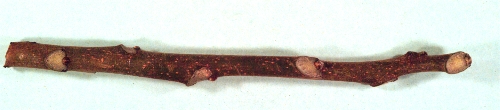
- twigs short, reddish-brown, velvety
- large leaf scars with small, two-scaled buds
- light brown, wide pith
Propagation
- by seed
Cultivars/Varieties
- some exist, but are not commonly available
- selections for fruiting (female) forms and more pendulous branching
- good male selection would prove to useful and non-weedy