Rhododendron schlippenbachii
Royal Azalea
Ericaceae
Habitat
- native to Korea, Manchuria, Japan
- zone 4
Habit and Form
- typical size is 5' to 7' tall; can get to 15' tall
- a deciduous shrub
- rounded shape
- upright, multi-stemmed branching
Summer Foliage
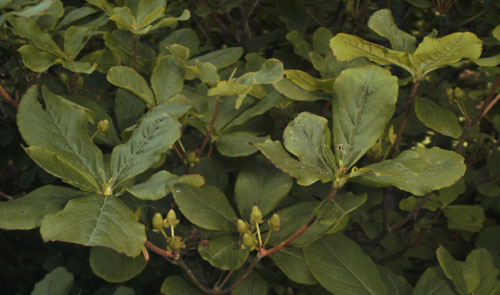
- deciduous, simple leaves
- leaf arrangement is alternate, but appears whorled at the branch tips
- obovate leaf shape
- leaves 2' to 5' long
- leaf apex is blunt or notched
- leaves are dark green above and paler underneath
Autumn Foliage
- a mix of yellow, orange and red
- fall foliage is quite attractive
Flowers
- light pink flowers
- usually numerous and showy
- bloom time is mid-may
- each flower is 2.5' to 3" in diameter
- flowers are held in groups of 3 to 6
- fragrant
Fruit
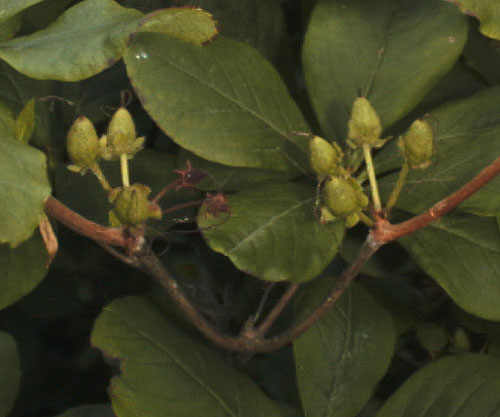
- non-ornamental capsules
Bark
- gray-brown
- not ornamentally important
Culture
- cool, moist acidic soils are best
- more tolerant of pH 6.5 to 7.0 than most other azaleas
- full sun to light shade
- avoid harsh locations
Landscape Use
- as a specimen
- foundation plant
- borders
- naturalistic areas
- in small groupings
- useful for flowers and fall foliage color
Liabilities
- specific sol and site requirements
- sometimes views as difficult to get established
- occasional leaf spot disease
ID Features
- very showy pink spring flowers
- obovate leaves with blunt tips
- orange-red fall color
- flowers have 10 stamens
Propagation
- by cuttings
- by seed
Cultivars/Varieties
'Sid's Royal Pink' - This is the only commonly available form, and it is quite common in specialty catalogs. It has a more compact growth form to 5' tall with large, deep pink flowers. The fall color can be very good.