Quercus macrocarpa
Bur Oak, Mossycup Oak
Fagaceae
Habitat
- native to eastern and central United States
- hardy to zone 3
Habit and Form
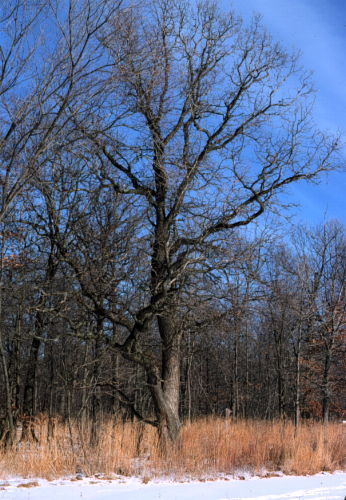
- a large, deciduous tree
- somewhat columnar in youth, broad crown with age
- 70 to 80' tall
- equal of greater spread at maturity
- coarse texture
- slow growth rate
Summer Foliage
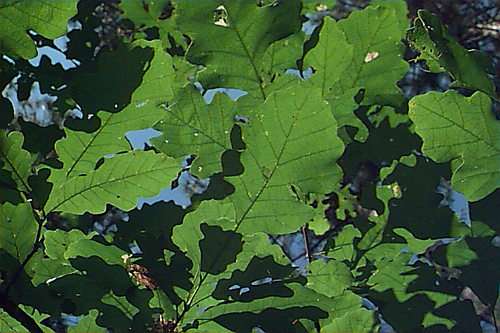
- alternate leaf arrangement
- simple, deciduous leaves
- obovate leaf shape
- 4" to 10" long
- cuneate leaf base
- 2 to 3 pairs of rounded lobes
- whitish tomentose leaf underside
- dark green leaf color
Autumn Foliage
- yellowish-brown fall color
Flowers
- brown catkins
- not ornamentally important
Fruit
- 1" to 1.5" long, brown acorn
- ovoid shape
- 0.5" covered by involucre
- involucre in downy on inside
- scaly involucre
- downy at apex
Bark
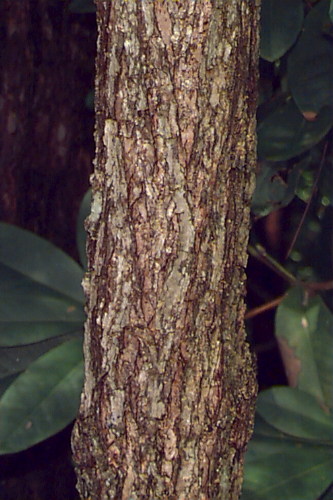
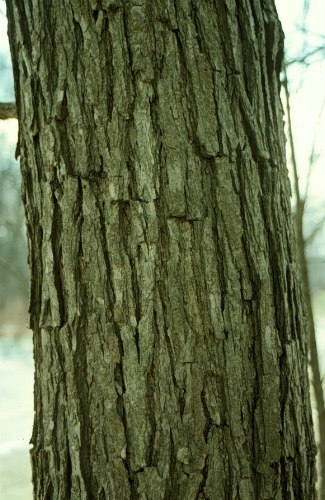
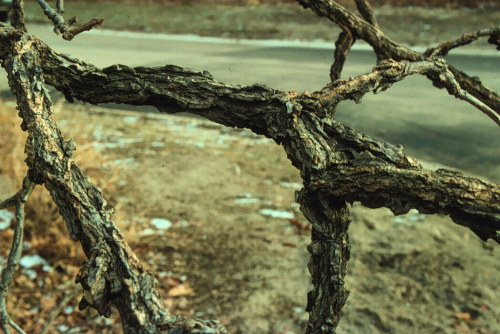
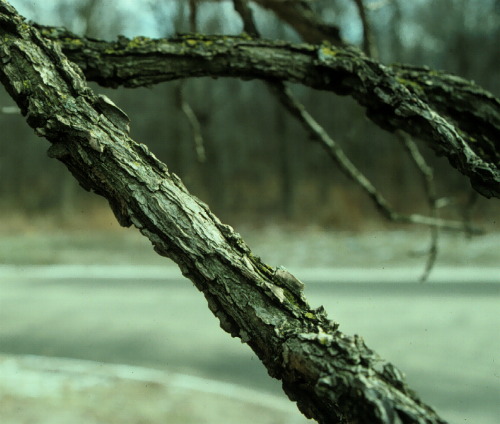
- grayish-brown bark color
- flaky distinct bark
- corky stems, yellowish-brown
Culture
- transplant from container
- prefers rich, well-drained soil
- prefers a alkaline soil
- full sun
Landscape Use
- shade tree
- for large area
- street tree
- specimen
Liabilities
- no serious pest problems
ID Features
- leaves with rounded lobes
- light brown, ovoid buds, 0.25" across and pubescent
- grayish-brown bark
- small, ovoid acorns
Propagation
- by seed
Cultivars/Varieties
'Clemons' (Heritage®, a selection of Quercus x macdanielli) - This hybrid with English oak (Quercus robur) is a vigorous grower, unusual for an oak. It is a broad pyramidal grower that becomes an oval tree to 80' tall and 50' wide. It offers attractive foliage that is dark green, glossy and resistant to mildew and tearing in the wind. This new plant may be useful as a shade tree.