Quercus imbricaria
Shingle Oak, Laurel Oak
Fagaceae
Habitat
- eastern, central and southern U.S.
- zone 5
Habit and Form
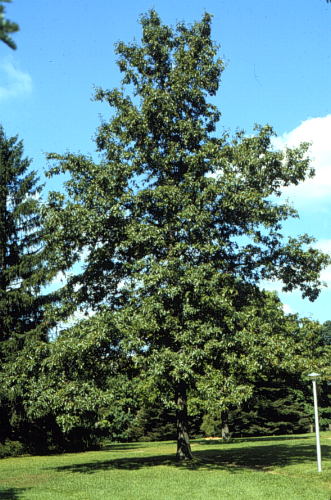
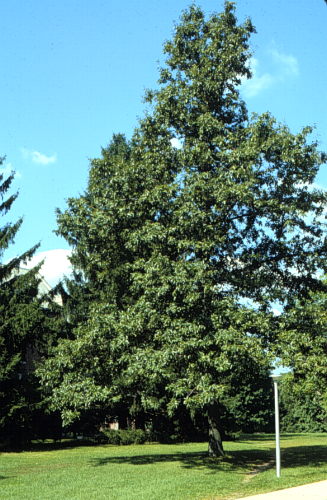
- 50 to 75' tall
- pyramidal in youth
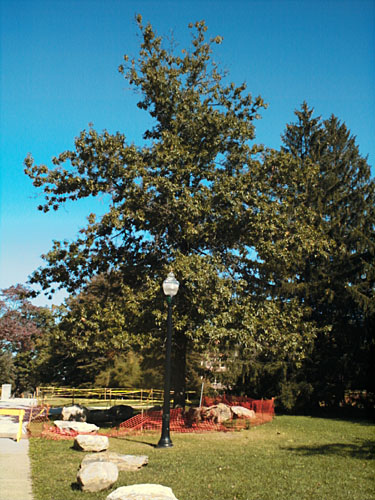
- oval, rounded or gum drop-shaped when mature
- branching is upright and spreading
- lower branches can hang down much like pin oak
Summer Foliage
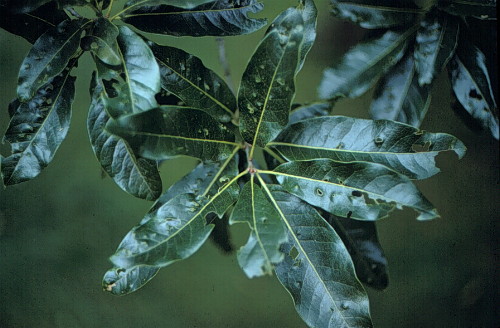
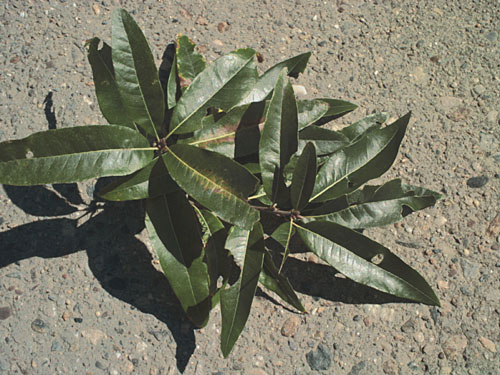
- simple, unlobed leaves
- alternate leaf arrangement
- leaves are 3" to 6" long 1.0 to 1.5" wide
- matured summer foliage is a very dark, lustrous green
- attractive, high quality, summer foliage
Autumn Foliage
- yellow-brown
- brown leaves persist on the tree into winter
Flowers
- monoecious
- pendulous yellow-green catkins (male)
- blooms in May
- messy
Fruit
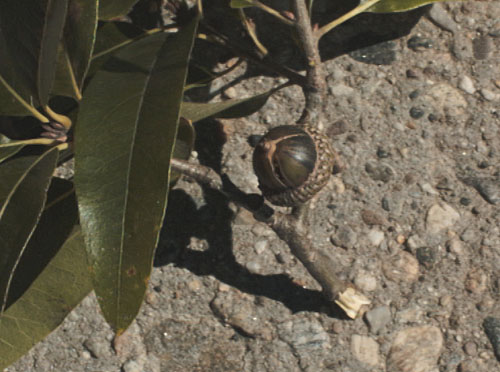
- small acorns
- 0.6" long
- take two years to mature (black oak group)
Bark
- gray brown color
- develops shallow furrows and ridges
Culture
- fairly easy to transplant for an oak
- full sun
- tolerant of urban conditions
- prefers moist, well-drained, acidic soils, but quite adaptable
- can be hedged
Landscape Use
- shade tree
- specimen
- naturalizing
- hedging and barriers
- can be a very beautiful tree
Liabilities
- possible twig kill in severe winters
- leaves persist on tree into winter
ID Features
- unlobed leaves distinguish it from many oaks
- retained leaves in winter
- small acorns
Propagation
- by seed
Cultivars/Varieties
- none