Leucothoe racemosa
Sweetbells Leucothoe
Ericaceae
Habitat:
- native to Massachusetts down through Louisiana
- hardy to zone 5
Habitat and Form:
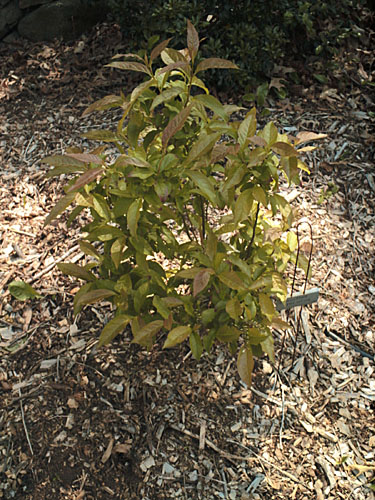
- a deciduous shrub
- 4' to 6' tall and similar in width
- suckers
- medium-coarse texture
- moderate growth rate
Summer Foliage:
- alternate leaf arrangement
- simple, deciduous leaves
- elliptical leaf shape
- 0.5" to 2.5" long
- crenate leaf margin
- lustrous green leaf color
Fall Foliage:
- reddish fall color
- somewhat showy
Flowers:
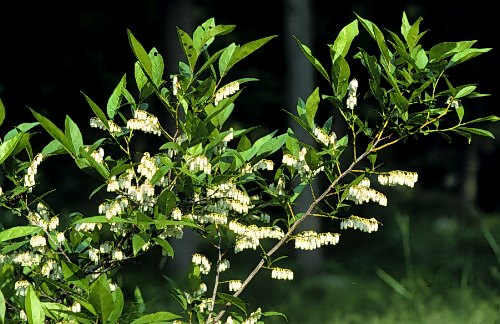
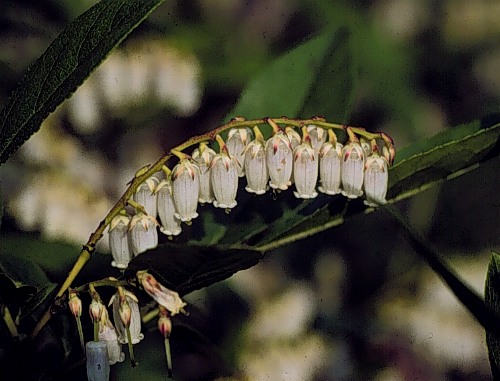
- white flowers
- 0.33" long
- borne in racemes, up to 4" long
- blooms in May and though June
Fruit:
- capsule
- not ornamentally important
Bark:
- stems mix of green and red
- glabrous and shiny
Culture:
- prefers moist, cool, acid soils
- best in partial shade
- can rejuvenate old plants by pruning to ground in spring
- protect from winter wind
- tolerates wet sites
Landscape use:
- naturalizing
- borders with other ericaceous plants
- facer plants with taller plants
- shady bank stabilization
Liabilities:
- desiccation burn in winter in exposed sites
- leaf spot can be a problem in area with poor air circulation
ID Features:
- stout, glabrous green-red stems with little lateral branching
- colonizing habit
- evergreen, alternate, 0.5" - 2.5" long leaves
- racemes of white urn-shaped flowers in axil
Propagation:
- cutting root readily in June or winter root easily with hormone
- seed
Cultivars/Varieties: