Cytisus scoparius
Scotch Broom, Common Broom
Leguminosae
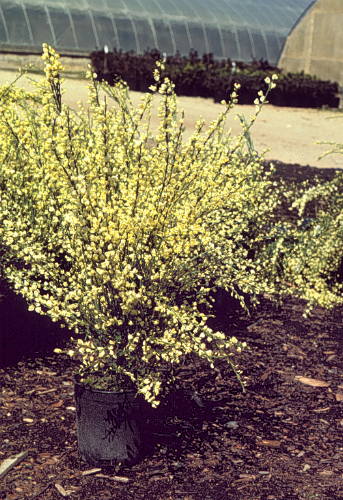
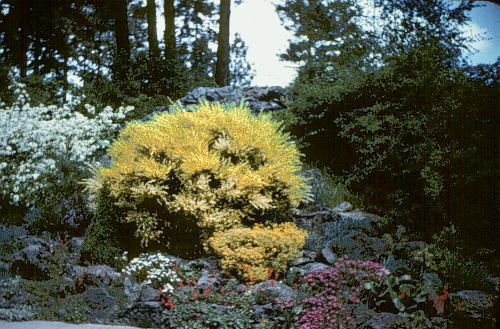
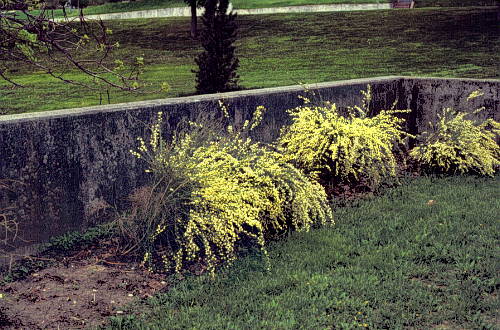
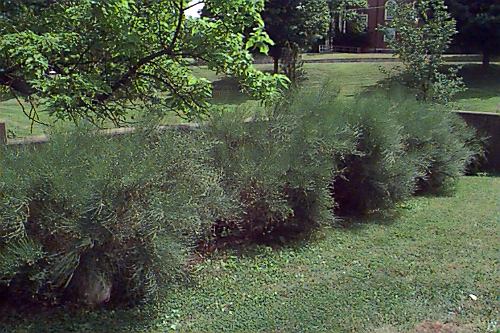
Habitat
- native to central and southern Europe
- hardy to zone 5, performs better from zone 6
- Special Note: This species has demonstrated an invasive tendency in Connecticut, meaning it may escape from cultivation and naturalize in minimally managed areas. For more information, .
Habit and Form
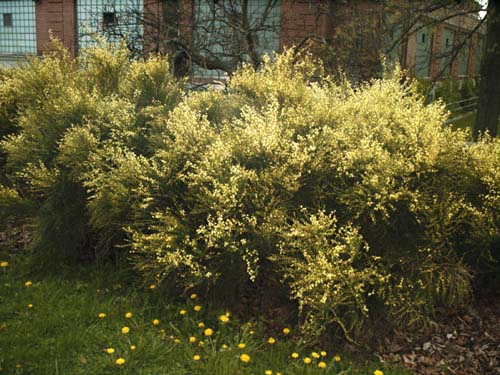
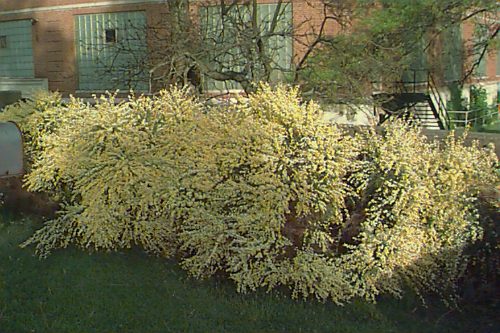
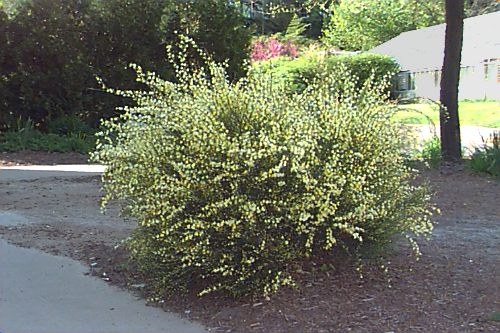
- 4' to 6' tall deciduous shrub
- shape is rounded to irregular
- fine textured and twiggy
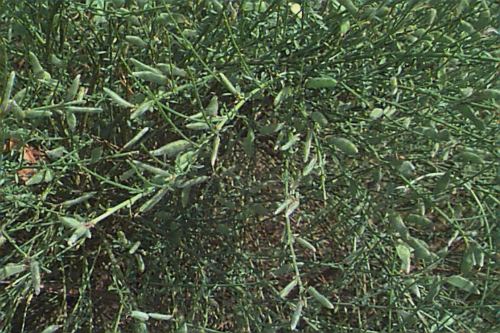
- branches green and in sprays
- branching is upright to arching
Summer Foliage
- deciduous
- leaf arrangement alternate
- small trifoliate leaves
- upper leaves often with only 1 leaflet
- color is medium to bright green
- stems are green and more conspicuous than the foliage
- stems are angled and flexible
Autumn Foliage
- fall color not ornamentally important
Flowers
- blooms in May and into early June
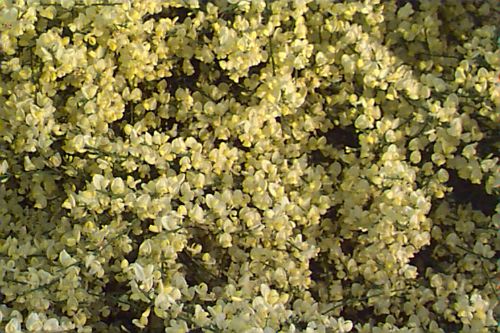
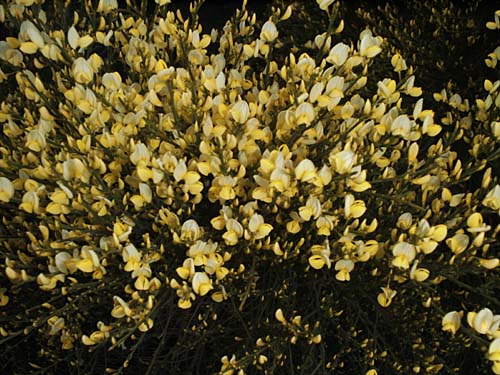
- pea-like flowers are vivid yellow
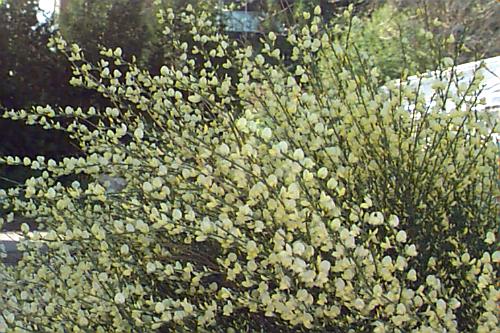
- blooming is profuse and very showy
Fruit
- 1.5" to 2" pea-like pods
- not ornamentally significant
Bark
- stems are green year-round
- very old stems are gray-brown
Culture
- needs full sun
- best in dry, sand soils
- cut-back some growth after blooming
Landscape Use
- as an accent for stunning bloom
- for borders
- specimen
- along highways
Liabilities
- tends to be somewhat short-lived
- twig kill in severe winters
- tends to self-sow
ID Features
- year-round green stem color
- angled stems
- trifoliate leaves
- yellow pea-like flowers
Propagation
- by cuttings for cultivars
- by seed
Cultivars/Varieties
There are perhaps 100 or more cultivars in existence, but most are not available in the U.S. Listed below are some of the more commonly-available cultivars.
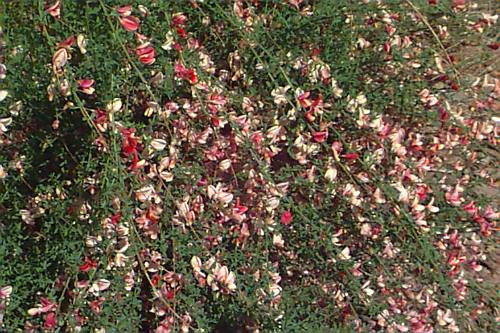
'Andreanus' - A bicolor with red and yellow petals. An upright form to 8' tall.
'Burkwoodii' - An upright form with red-brown flowers. A vigorous, bushy grower.
'Lena' - Red and yellow petals. Only 3' to 4' tall and wide. A C. dallimorei hybrid..
'Lilac Time' - Another C. dallimorei hybrid. A compact grower with reddish-pink and purple flowers.
'Minstead' - Small white flowers flushed with lilac and purple. Slender, arching habit.
'Moonlight' - Creamy-white or primrose flowers. Upright habit to 5' or 6' tall. Very common in the trade.
'Nova Scotia' - An extra-hardy form with yellow flowers.
'Pink Beauty' - The best pink-flowered selection.
'San Francisco' - Flowers are dark red.
'Stanford' - Flowers are orange and red, but appear orange from a distance.