Clethra barbinervis
Japanese Clethra
Clethraceae
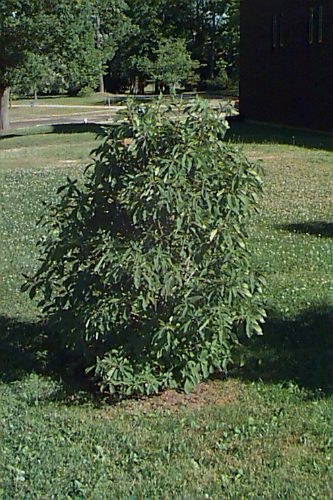
Habitat
- native to Japan
- hardy to zone 5
Habit and Form
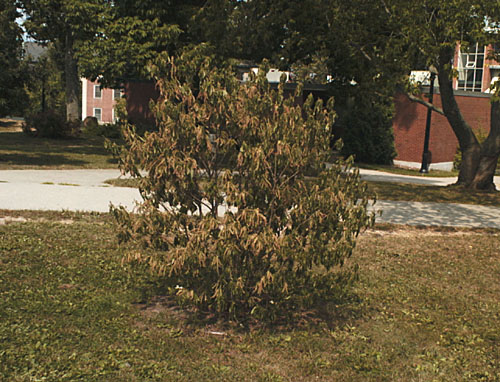
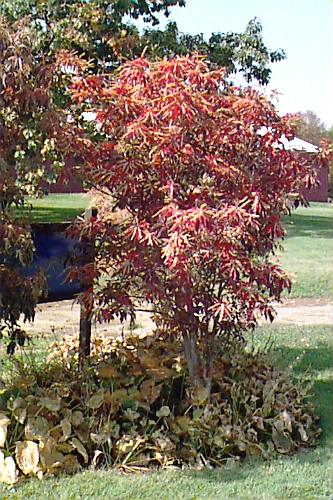
- a deciduous large shrub or small tree
- 10' to 20' tall
- rounded habit
- medium texture
- fast growth rate
Summer Foliage
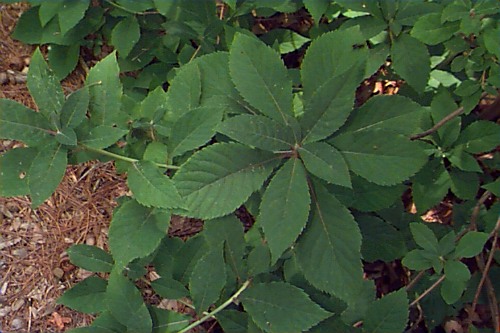
- alternate leaf arrangement
- deciduous, simple leaves
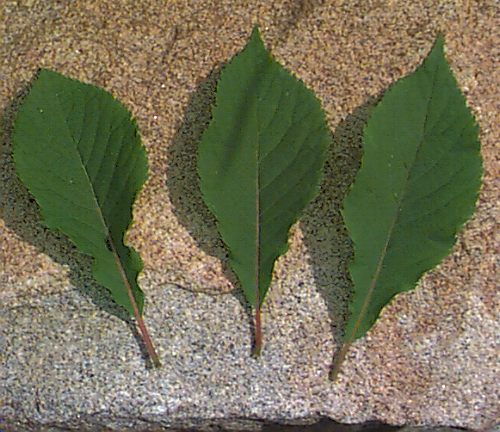
- ovate leaf shape
- 2" to 5" long
- serrated leaf margin
- dark green leaf color
Autumn Foliage
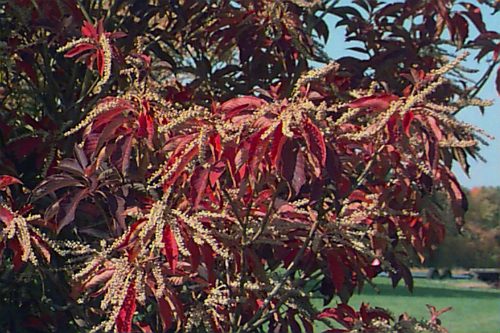
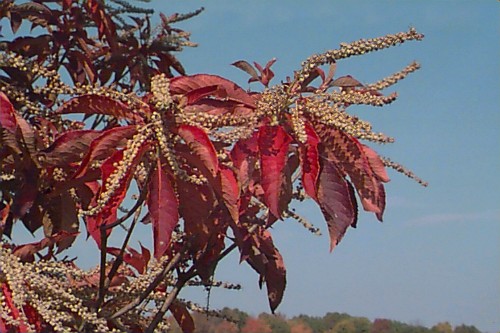
- bronze to red fall color
Flowers
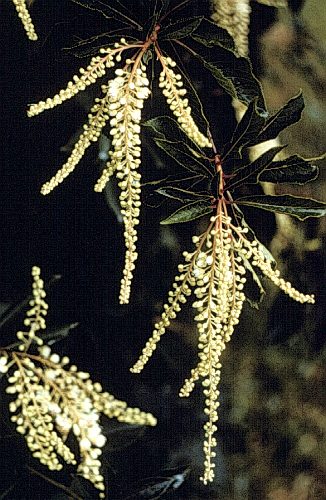
- numerous, small white flowers held in racemes.
- racemes are 4" to 6" long
- found at terminal tips
- nicely fragrant
- blooms in July and August
- blooms on current seasons growth
- showy
Fruit
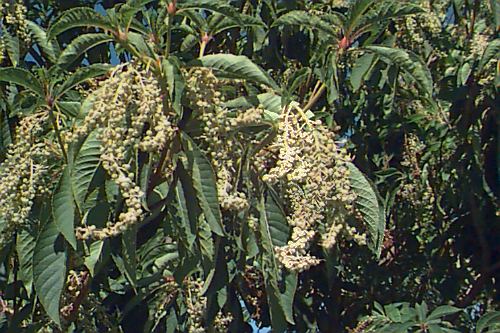
- small capsules
- borne in long terminal spikes
- turn brown in fall
Bark
- smooth exfoliating bark
- gray to reddish brown color
Culture
- prefers moist, fertile soil
- transplant from container or B&B
- may be slow to establish and some twig tip dieback may occur during the first winter.
- relatively easy to grow
- full sun to partial shade
- avoid hot, dry sites
Landscape Use
- screen
- specimen perhaps
- in groupings
- shrub border
- colonizing nature can be useful
- highly useful for late summer fragrant flowers
- site the plant so fragrance can be appreciated
- tolerant of ocean-side plantings
- naturalistic/native landscapes
Liabilities
- relatively pest free except for spider mites
- spider mites can be severe on plants in hot, dry locations
- hard to find
ID Features
- fragrant spires of white flowers in mid to late summer
- persistent fruit capsules
- ovate, alternate, deciduous leaves with serrations
- suckering, colonial type growth
- exfoliating bark
Propagation
- by seed
- easily rooted by summer cuttings
Cultivars/Varieties
- none