Chionanthus virginicus
White Fringetree, Grancy Gray-beard
Oleaceae
Habitat
- native to southeastern and south central United States
- zone 5 and warmer parts of 4
- most northern population is in southern New Jersey
Habit and Form
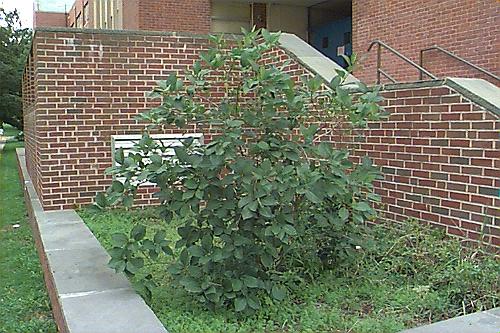
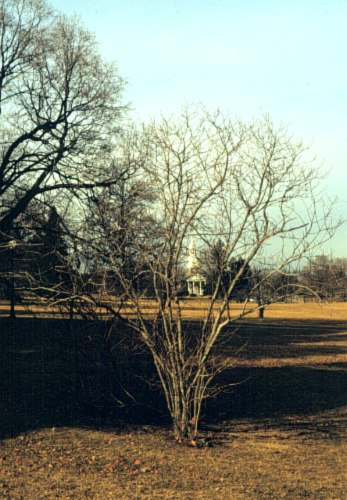
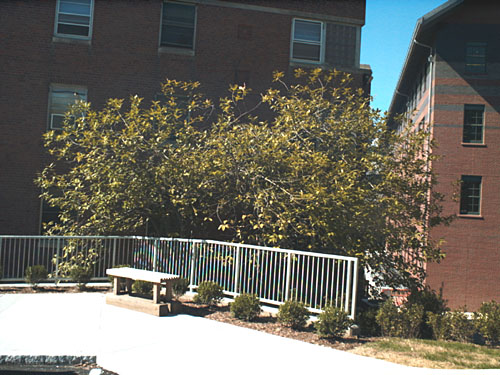
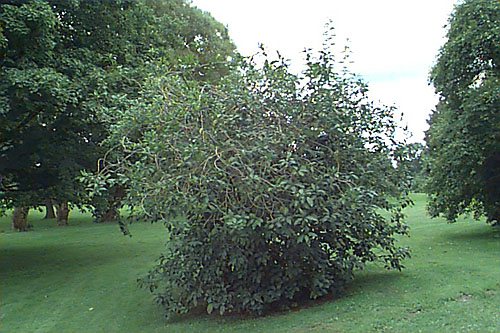
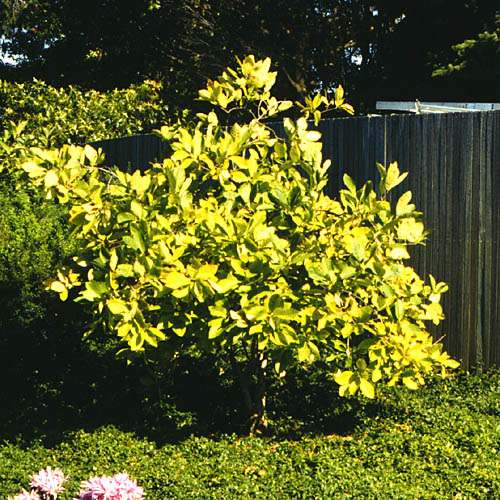
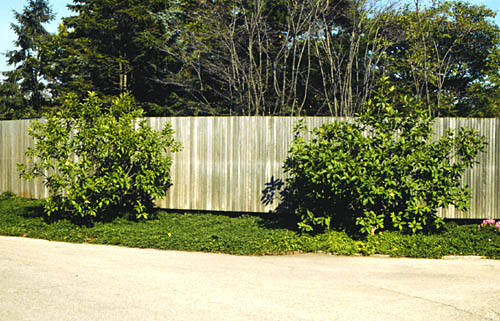
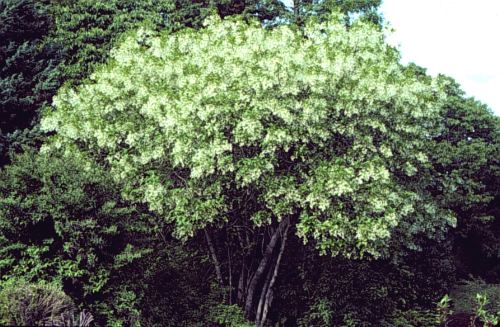
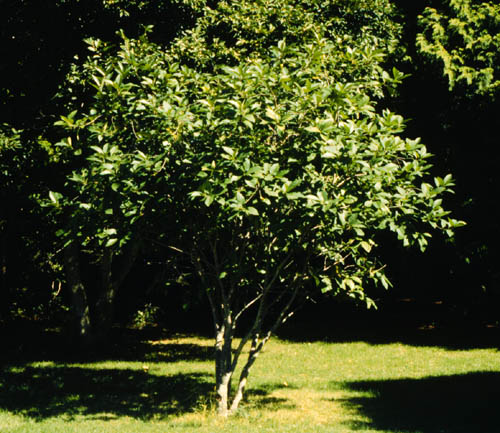
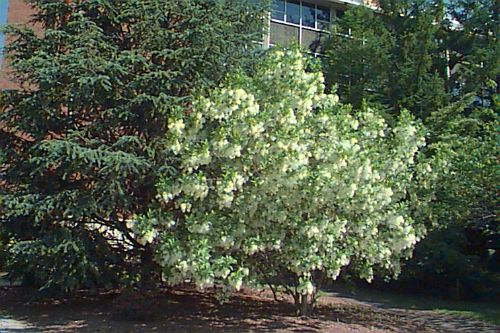
- a deciduous small tree or large shrub
- 12' to 20' tall
- spread equals height
- shape ranges from irregular and open to dense and rounded
- habit is quite variable
- multi-stemmed in most cases
- somewhat slow growing
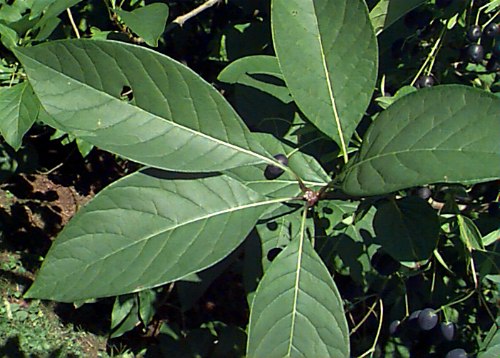
Summer Foliage
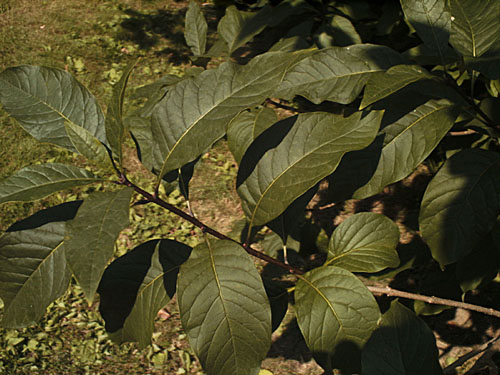
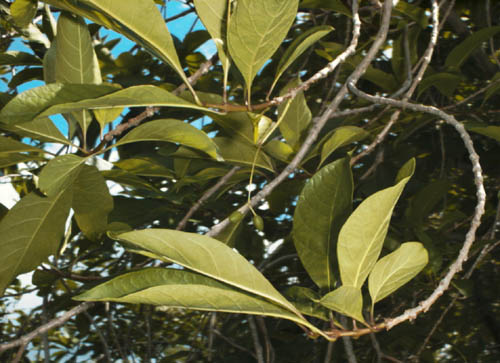
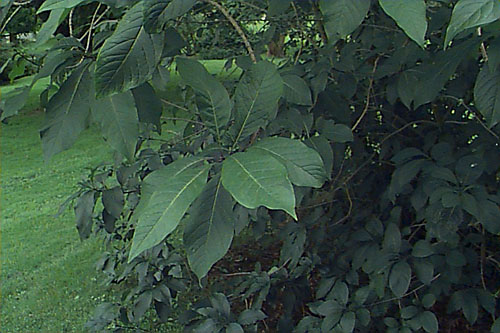
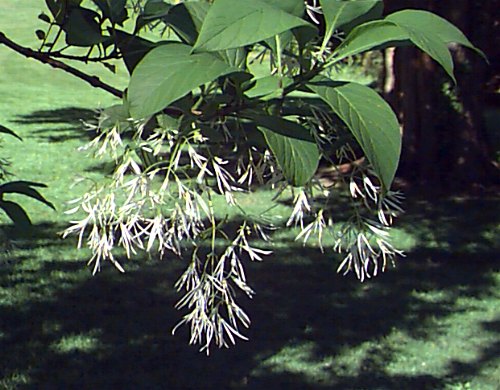
- opposite arrangement
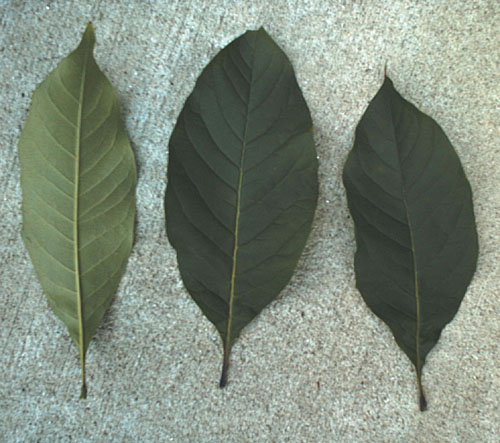
- simple, elliptic or elongated leaves
- acute base and tip
- leaves are 3" to 8" long
- leaves are 1.5" to 3" wide
- color is dark green
- one of the last deciduous plants to leaf out in the spring
Autumn Foliage
- a mix of yellow, green and brown
- can be a good yellow or golden color
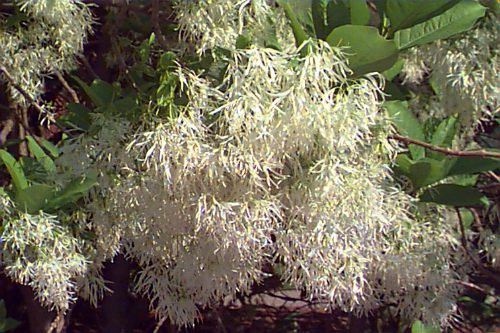
Flowers
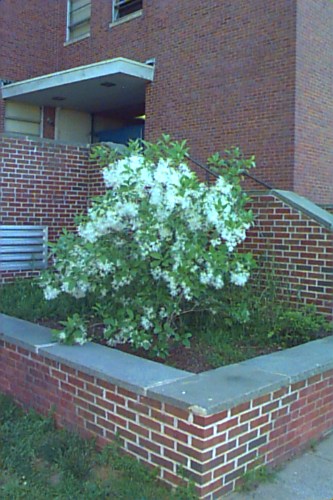
- dioecious, with male and female plants
- male flowers are showier than female flowers
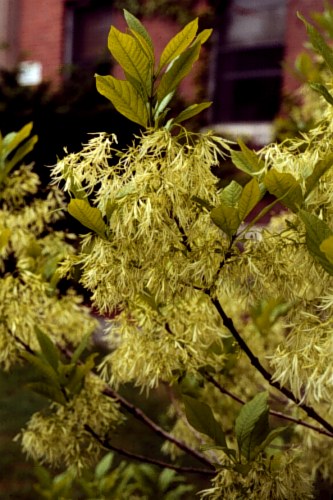
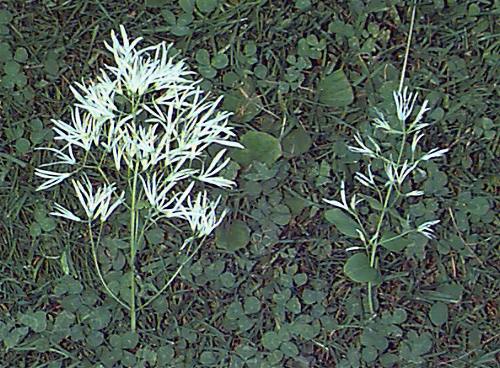
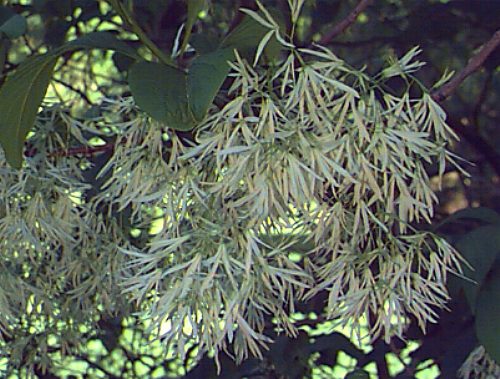
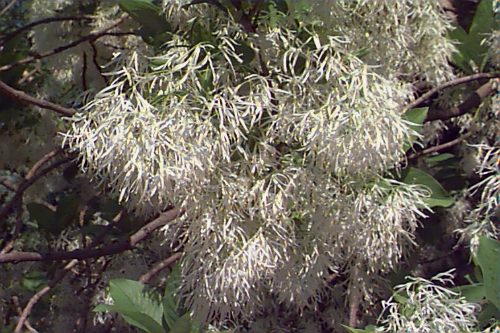
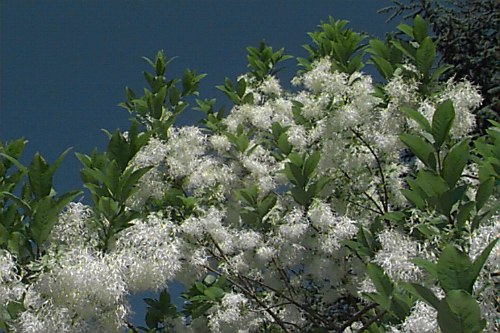
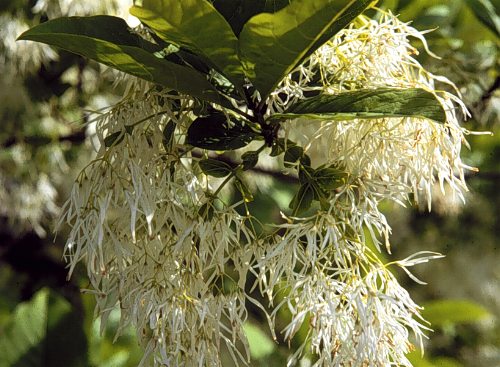
- white
- fringe-like flowers
- flowers are in loose clusters
- clusters are 4" to 8" long
- very showy in bloom
- bloom time is late May to early June
- slightly fragrant
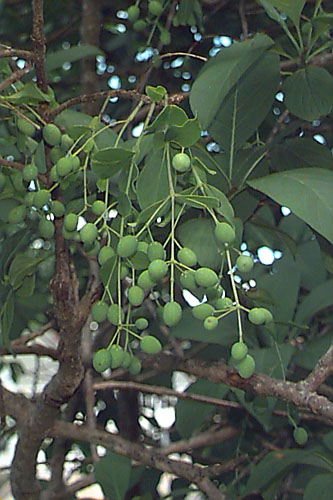
Fruit
- on female plants only
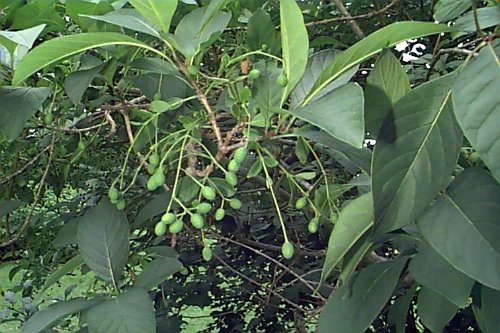
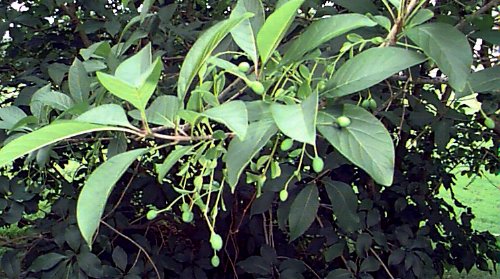
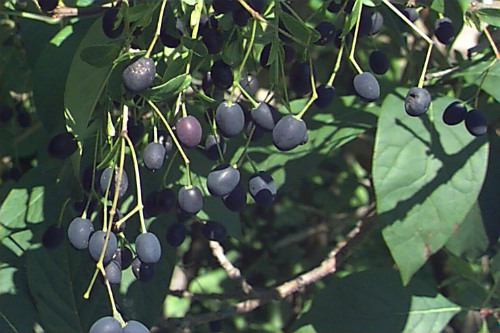
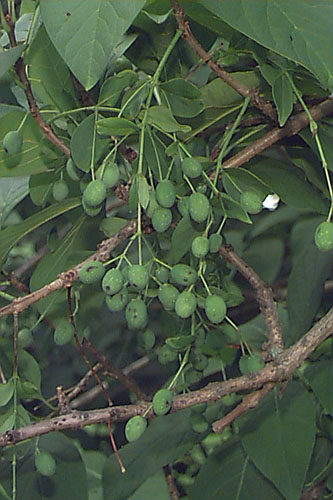
- blue-black "olive-like" fruits
- 0.5" to 0.8" long
- held in clusters
- enjoyed by birds
- somewhat hidden by foliage
- ripens in late August through September
- male plant needed in vicinity for fruit to set
Bark
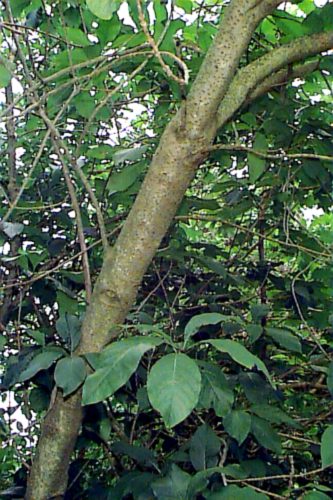
- smooth on young branches
- slightly ridged and rough on mature trunks
- gray color
Culture
- full sun to partial shade
- prefers moist, deep, acidic soils that are well-drained
- fairly adaptable
- possibly difficult to transplant
- requires little maintenance once established
Landscape Use
- specimen
- naturalistic plantings
- shrub border
- for flowering
- fruits to attract birds
- in groupings
- urban sites due to pollution tolerance
Liabilities
- propagation is difficult so plant is expensive or hard to locate in commerce
- most plants are seed propagated so the plant sex is generally unknown for purchased plant
- slow growing
ID Features
- stem is square
- late to leaf out in Spring
- white fringe-like flowers
- females with purple-black "olive-like" fruit
- multi-stemmed large shrub or small tree
Propagation
- by seed
Cultivars/Varieties
- None