Chamaecyparis nootkatensis
Nootka Falsecypress, Alaska Cedar
Cupressaceae


Habitat
- native to coastal or mountainous, moist regions of North America from Alaska south to Oregon
- hardy to zone 4 where atmospheric moisture is high in winter
Habit and Form
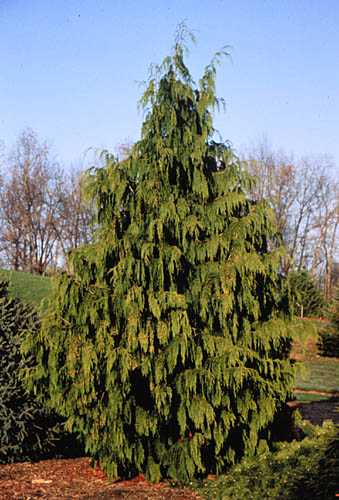
- a medium-sized evergreen tree
- pyramidal form
- 30' to 45' tall in cultivation
- pendulous sprays of needles
- medium texture
- medium growth rate
Summer Foliage
- evergreen, needle -like leaves
- needles are closely appressed
- spreading sprays
- pointed apex
- grayish green needle color
- rank smell when crushed
Autumn Foliage
- no autumn color
- evergreen
Flowers
- not of ornamental importance
- monoecious
Fruit
- globose, brown cones
- 0.33" to 0.5" in diameter
- ripens in second year
Bark
- squared stems
- shredding bark
- reddish brown color
Culture
- prefers deep, moist, loamy soil
- needs a well-drained site
- best in full sun
- cold hardy
Landscape Use
- lawn tree
- for evergreen features
- specimen
Liabilities
- hard to find and expensive
- blights
- generally pest free
ID Features
- needle-like leaves
- no white markings typical of chamaecyparis
- rank odor when needles are crushed
- small brown cones
- shredding bark
Propagation
- by cuttings
- by seed, rarely done
- by grafting
Cultivars/Varieties
'Aurea' - Bright yellow new growth, color is retained well throughout the season.
'Glauca' - Blue foliage on branches that weep. Habit is upright, to 25'
'Pendula' - An extremely hardy cultivar that is increasingly common in today's landscapes. The branches are strongly weeping and display deep green foliage.
'Variegata' - Green foliage bears irregular gold flecks.